Counterfeit money
Gift-giving and the university’s unsettled debts.

Standing among blinding aisles of produce in one of Texas’s cultishly celebrated H-E-B supermarkets, I overheard a brief conversation. At the meat counter, a customer repeated a phrase over and over in an expectant refrain: “Thank you… thank you… thank you…” Pausing between each iteration, she glared at the butcher, awaiting a response. At last, he replied, “Are you waiting for me to say ‘you’re welcome’?” The customer looked at him once more; the butcher caved. After the anticipated words were exchanged, the two parted ways—the social debt established by the entitled shopper was settled.
Since his second election into office, President Trump has reproduced this dynamic in the public at large. Writing on Truth Social in April 2025, he declared: “Remember, Tax Exempt Status [for universities] is totally contingent on acting in the PUBLIC INTEREST.” Beginning that spring, the administration froze billions in funding at several elite universities, demanding changes to university governance and operations. Alongside the freezes came proposed cuts to research funding, as well as a hike in the endowment tax on the wealthiest universities, Yale included.
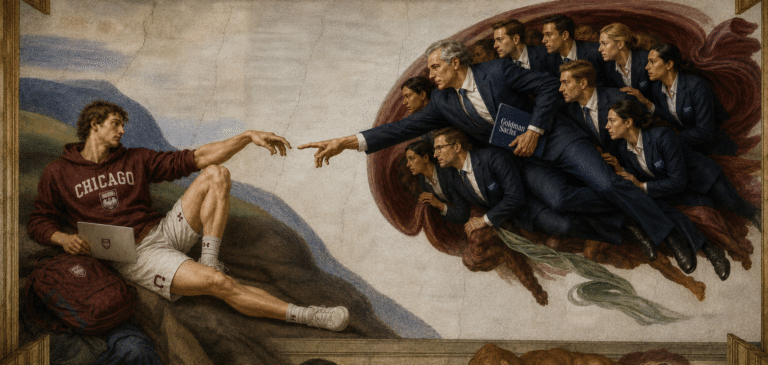
Reframing the relationship between the government and the academy, these actions lay bare a latent contradiction at the core of the modern university: the economy of the gift versus the transactional logic of exchange. To understand why this brittle tension has collapsed now, and to grasp the historically singular yet structurally determined nature of this collapse, we must look to the past. Sketching a brief cartography of my school, Yale, offers a first step towards understanding this change’s implications for the modern university.
Continue reading original articleRelated Articles
-

-

- Higher Ed
Michigan’s Pass/No Credit Pilot Is Suspended. The Mental Health Debate Shouldn’t Be.
- University of Michigan
October 28, 2026 -