
America’s Growing Class Divide: A Fireside Chat with Charles Murray
Charles Murray talks to Princeton students about inequality, elite “bubbles,” and bridging America’s class divide
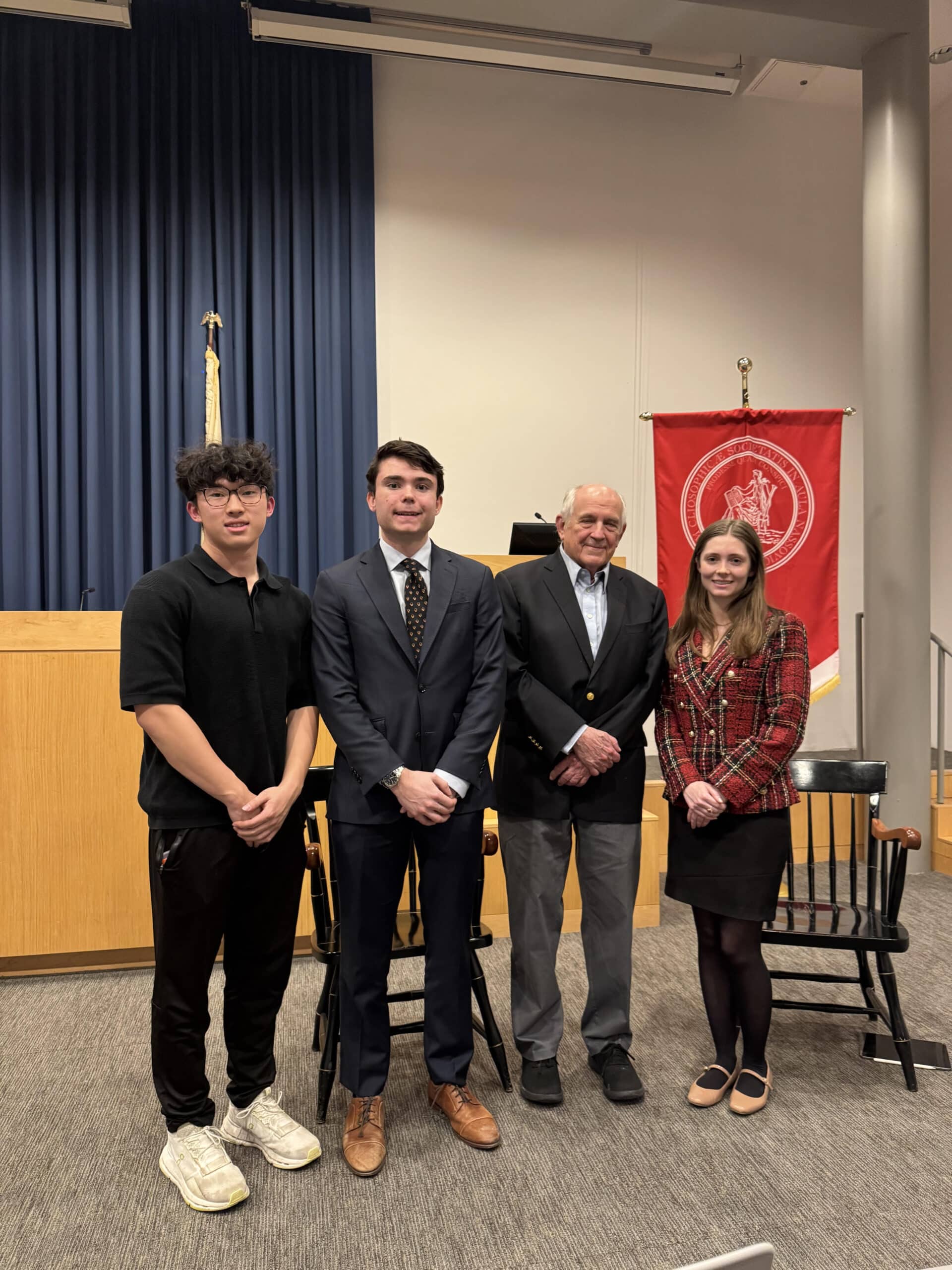
This January, I had the pleasure of succeeding Tory publisher William Neumann as the Cliosophic Society (Clio) Chairman. Clio, the right-leaning society within Whig-Clio, regularly hosts notable conservative speakers. On February 26th, we welcomed AEI Senior Fellow Charles Murray to campus for our first event of 2026. Murray has authored well-known books such as Coming Apart and The Bell Curve, which provoked controversy for their respective critiques of American elitism and hereditary intelligence. Clio members listened to Murray lecture on inequality in the United States, asked questions, and conversed with him over dinner at Winberie’s.
Mr. Murray’s talk addressed themes connected to Coming Apart. He explained an ongoing trend that began in the 1960s, when a new, highly educated, affluent elite class emerged whose values and behavior have increasingly diverged from the working class. These elites concentrate in zip code “bubbles” like the town of Princeton, in which they practice certain cultural values (commitment to education, civic engagement, and consumption of highbrow media) that are less common in other zip codes. Murray expressed concern over how this trend has impoverished our shared national culture. The insulation of today’s elites from the rest of the population has divided the country into two distinct populations: the elites and everyone else, living under different rules and expectations.
Murray mentioned that top institutions like Princeton unintentionally contribute to this class divide. He argues that one of the driving causes of our nation’s division is “assortative mating.” By living in zip code bubbles and/or attending prestigious universities like Princeton, elites are likely to find another elite as their significant other. This has important ramifications: in The Bell Curve, Murray found that parents’ IQs strongly influence their children’s IQs. Due to the impact of genetics and privileged parenting practices (reading to babies, extensive individual attention, sending kids to private school, etc.), most future elites will descend from the present elite generation. A large percentage of new Princeton graduates enter top-paying fields like finance, consulting, medicine, and law, consequently joining the elite class. The fact that many of us will hold positions of influence without knowing how the vast majority of the country lives contributes to the nation’s growing class divide and polarization.
Continue reading original articleRelated Articles
-
-

- Higher Ed
- |
- Science & Technology
The Future of AI in Higher Education
- Dartmouth College
October 22, 2026 -
- Federal
- |
- Higher Ed
Updated: Former Stanford Hoover Fellow Runs Surrogacy Firm Helping Chinese Elites Have U.S.-Citizen Children
- Stanford University
October 20, 2026