A Glimpse of Shanghai
From the moment flight UA193 touched down, the pace of the city absorbed me.
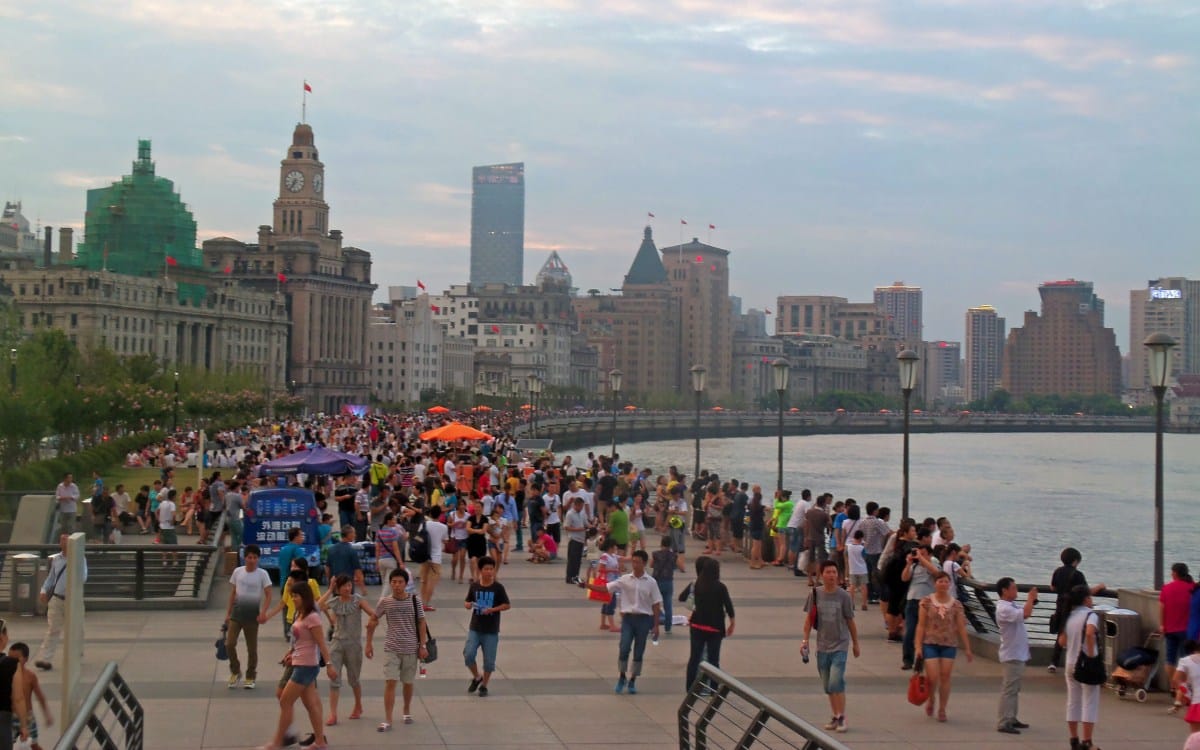
A distinct sound echoes through Shanghai. From the moment flight UA193 touched down, the pace of the city absorbed me. Genial yet short-fused taxi drivers barked in rapid-fire Shanghainese, creating a newfound sense of urgency, while cigarette smoke clung to the leather seats and the monotone hum of electric vehicles drifted into the night. Shanghai has a kind of “quiet chaos” to it. It offered a respite from Western living, yet the familiar comfort of the Bund’s Western vestiges and the uncertainty of China’s many wonders welcomed me with open arms. This push and pull kept returning throughout my first three weeks here. On the first day of orientation at NYU Shanghai, still badly jet-lagged, I heard something that has stayed with me: Take a moment to hear Shanghai, breathe it. Hug it. And once you’re done savoring it, tell me: what do you understand more about it now than you did before you took this leap of faith? It was Ted Magder’s, Vice Provost for Academic Affairs, call to action: to go beyond the Oriental Pearl Tower and the skyscrapers, and rather than just talk about Shanghai and China, to immerse myself in the once-in-a-lifetime experience of living here for a semester. This essay is one step in that direction.
Before Shanghai, my only glimpse of China came in May 2025, when 80 Duke students, including me, were flown out for just nine days to experience a civilization the West has long known mostly through fables and cautionary tales. We experienced China through distinct cultural elements: fine dining on a lazy Susan in Nanjing, reverence for prosperity beneath the crisp skin of Peking duck, and a strong sense of community in a dragon dance. We traced the annals of Chinese history through Suzhou, Nanjing, and Beijing, whose relics serve as cultural touchstones for more than a billion Chinese people and their diaspora. Frankly, I came out with more questions than answers. For the past year, I tried to quench my curiosity by reading US foreign policy wonks, teaching myself Chinese history, writing extensively about it, and quoting Henry Kissinger’s On China whenever someone mentioned China’s past. Safe to say, my hubris led me to expect Shanghai to confirm my preconceived, big-picture view of China: an old agrarian culture transformed by the arrival of the West and rebuilt under the guidance of the Communist Party of China and its local governments. It turns out Shanghai is more than a Chinese rendering of modernity. I have learned to think of it as one piece of a larger Chinese civilization, whose geography, culture, and history have challenged me to get off my pedestal and see the city with humility, attentive to the generations that shaped its language and food.
Up close, Shanghai is a mosaic of colonial influence and economic development that together made it a global metropolis. Reflecting on the city led me back to the Greeks. When Zeno of Citium asked the oracle how to live the best life, he was told to “take on the complexion of the dead,” which he understood as a call to study the ancients. Following the same advice, I started with Shanghai’s past: the l loose fishing communities along the muddy banks of the Yangzi River. After the British and French carved out concessions in the 1840s, their districts filled with Gothic and Art Deco edifices that welcomed Russian and Jewish émigrés and, in 1921, hosted the founding congress of the Chinese Communist Party, a reminder of Shanghai’s tenuous relationship with both the West and the rest of China. Walking into the House of Roosevelt on the Bund with our class professor, who preferred to go by Ray, and my classmates, I experienced this complex relationship in the stories Douglon, general manager of the House of Roosevelt, told about his father’s business ventures, where colonial influence stitched promise and peril into the city’s economic tapestry, and where all nationalities had a stake in Shanghai’s future. Shanghai’s status as the world’s busiest container port, along with a long history I have yet to fully uncover, is a source of pride for its people. The Chinese 成语 (idiom) 愚公移山, about a foolish old man who moves mountains through sheer persistence, suggests that the heart of Shanghai’s economic dynamism is a perseverance written into the heritage it shares with the rest of China.
Continue reading original article