
Dean Ball and the “Human Chauvinism” Trap of AI
Ball argued that one of the most significant threats in the era of AI is what he called the “Silent Consensus.”

On October 22, at Harvard Department of Government’s annual Vik-Bailey Lecture, Dean Ball, head of strategic futures at OpenAI and former Senior Policy Advisor for Artificial Intelligence at the White House, spoke about the future of AI. He argued for the continued primacy of humans over the world and society. However, because of the absence of any role granted to virtue or value in his recommended solutions or preferred society, Ball failed to develop a compelling theory of humanism, and thus could not successfully defend the human primacy which he rightfully argued we ought to hold dear.
Ball argued that one of the most significant threats in the era of AI is what he called the “Silent Consensus.” According to this consensus, shared by many of those in Silicon Valley and regulators, the development of AI will lead to the loss of human primacy over world and individual events. According to Ball, many in the AI industry assume that the “best case scenario” is one in which AI systems come to take over much of the world — making economic, political, and even societal decisions for humans, rendering man complacent in a world where he has little autonomy.
But Ball said that we should find this outcome outrageous. We should recognize that humanity’s “history,” our having built society and civilization, justifies our continued control over world events. Even if AI systems “join that conversation,” they must recognize that this is a “human conversation,” and thus, that the world should be one dominated by human interests and decision-making, not AI interests. Ball calls this human-focused attitude “human chauvinism.” Some might merely call it “humanism.” In his view, it is a strange sociological fact that those in Silicon Valley have abandoned humanism.
Continue reading original articleRelated Articles
-
- Science & Technology
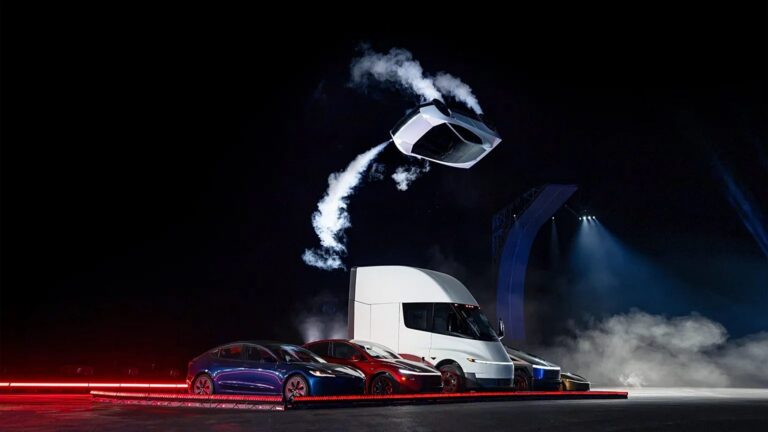
The Roadster Is Tesla’s Next Massive Failure
- University of Kansas
October 23, 2026 -

- Science & Technology
“Anathema to the true angel in Heaven”: Norman Mailer’s Of a Fire on the Moon
- Hillsdale College
October 23, 2026 -

- Philosophy
- |
- Science & Technology
The Psychology of Self Sufficiency
- Hillsdale College
October 23, 2026