
The Cornell Presidency Through History
Many protesters have focused their anger over sexual assault at Cornell into a demand that President Kotlikoff must resign.
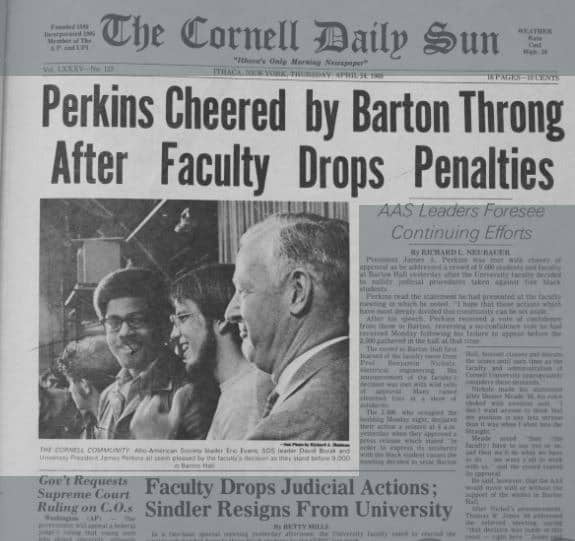
This is a two-part series on Cornell’s current governance deadlock. In Part 1, we looked at the current situation. This part looks back for historic precedents and patterns.
Judging by the chants and picket signs at recent demonstrations, many protesters focused their anger over sexual assault at Cornell into a demand that President Kotlikoff must resign. However, the “no confidence” text adopted by the Faculty Senate spoke in terms of the “central administration” rather than any individuals.
As is typically used, “central administration” includes many mid- and low-level administrators as well as Cornell’s highest officials. While Cornell’s Presidency rarely changes hands, the lower-level staff turns over much more frequently and in most cases without the involvement of the Trustees, President, or shared governance bodies.
Continue reading original articleRelated Articles
-
- Campus Life
- |
- Higher Ed
Investigation: The Effective Altruism Trojan Horse at Harvard
- Harvard University
November 19, 2026 -
- Campus Life
- |
- Higher Ed
Cornell Governance at a Crossroads over “Rape Culture”
- Cornell University
November 19, 2026 -

- Higher Ed
Classes Expose Students to Sexually Explicit Content Without Consent
- University of Notre Dame
November 19, 2026