
Closing the Loop on UChicago’s Campus Crime
On February 23rd at approximately 11:30 am, two armed suspects exited a blue Honda Accord in front of William Eckhardt Research Center with firearms to rob an individual affiliated with the University of Chicago before fleeing. Thankfully, no physical injuries were reported. Just two minutes earlier, at 11:28 a.m., I had stepped off a bus
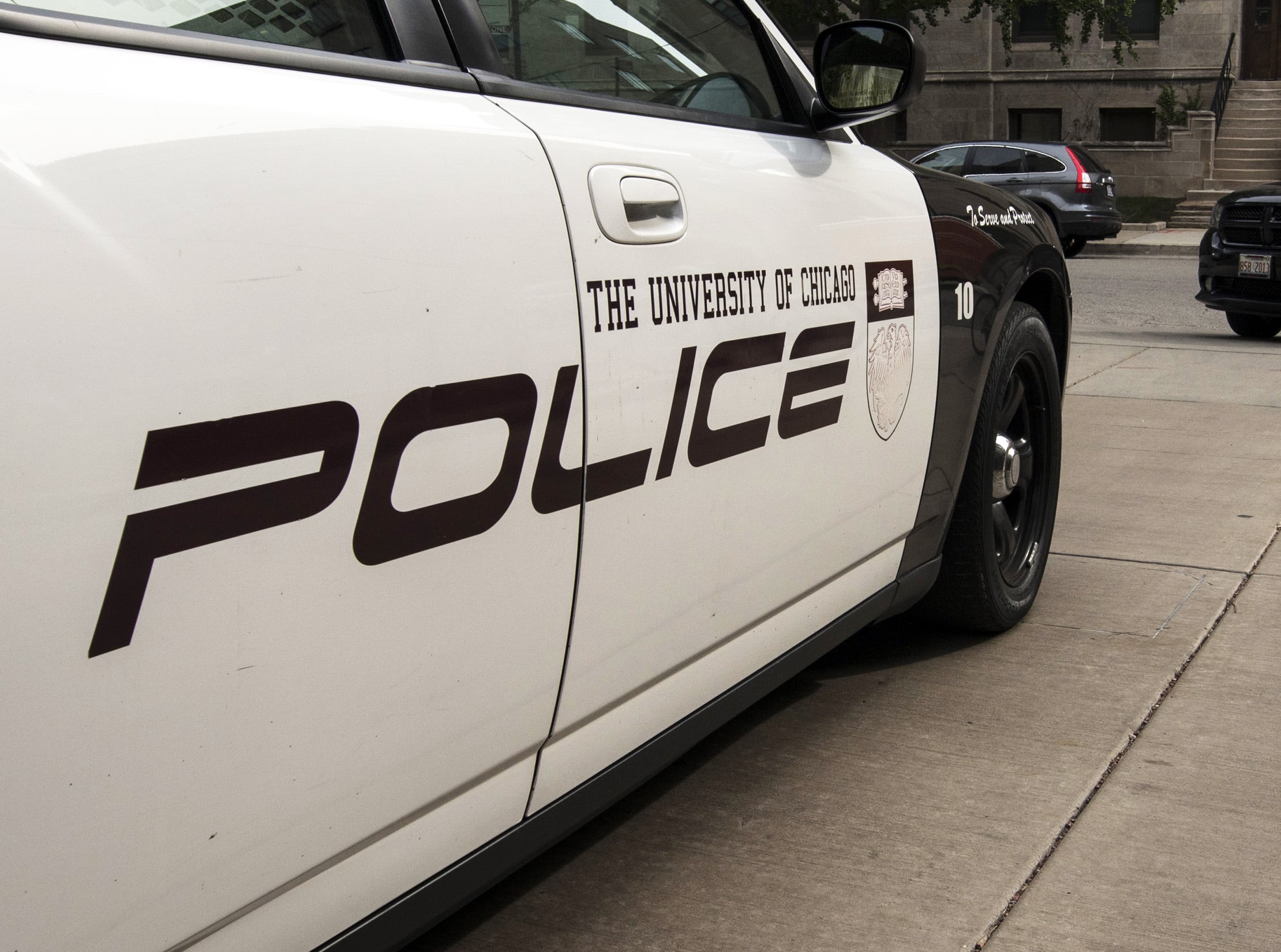
On February 23rd at approximately 11:30 am, two armed suspects exited a blue Honda Accord in front of William Eckhardt Research Center with firearms to rob an individual affiliated with the University of Chicago before fleeing. Thankfully, no physical injuries were reported. Just two minutes earlier, at 11:28 a.m., I had stepped off a bus at that same location. This was not an incident that occurred late at night or on the edge of the city. It happened on a bustling weekday morning at the center of campus—a minute’s walk away from classrooms, residence halls, and campus buildings. One hour after this brazen crime, at 12:35 p.m., the university’s Department of Safety and Security sent a security alert to all students and faculty informing them of the incident, shown below:
These security alerts rapidly provided by the university are in line with the Clery Act, which mandates that campus security authorities in federally funded universities must provide timely alerts of certain crimes reported within properties directly or indirectly associated with universities. Examples of qualifying crimes are aggravated assault, burglary, motor vehicle theft, murder, and more. As described by the university itself, “Timely security alerts will normally include the date, time, and a description of the incident, as well as other information that may aid in the prevention of similar crimes.” Furthermore, per university guidelines, “An alert may not be sent if there are factors that reduce the level of threat to the community, such as an arrest.”
In principle, these security alerts serve a well-defined function: to logistically communicate immediate threats to the university community. The problem, however, is that these security alerts are practically the only on-the-ground communication of the state of campus safety shared to students and the community. In the minutes to hours after a dangerous crime is committed on campus, students will be immediately notified of when and where an alarming incident occurred, and rightfully so. But after that, the trail goes silent. Students are never informed by the university in the weeks to months following a fear-inducing incident that shatters student perceptions of their safety on campus whether responsible suspects were ultimately taken into custody, if the belongings of victims were returned, if perpetrators were ultimately charged and sentenced, or even simply who these suspects were, even after being adjudicated guilty beyond a reasonable doubt by a jury or judge. With each new incident on campus, students are once again collectively thrown into a state of doubt regarding their safety, with no alternative information being provided suggesting that justice was served for their peers.
Continue reading original articleRelated Articles
-
- Campus Life
Notre Dame Implements Optional Pornography Filter
- University of Notre Dame
April 15, 2026 -

- Campus Life
- |
- Politics
Angela Davis Entertained Tyrants and Border Guards Before Pitzer’s Class of 2026
- Claremont McKenna College
April 7, 2026 -
- Campus Life
- |
- Higher Education
Is Grade Inflation a Problem?
- Washington and Lee University
March 27, 2026