
A Covenant Renewed: The Biblical Roots of the American Founding
What does it mean to be an American?
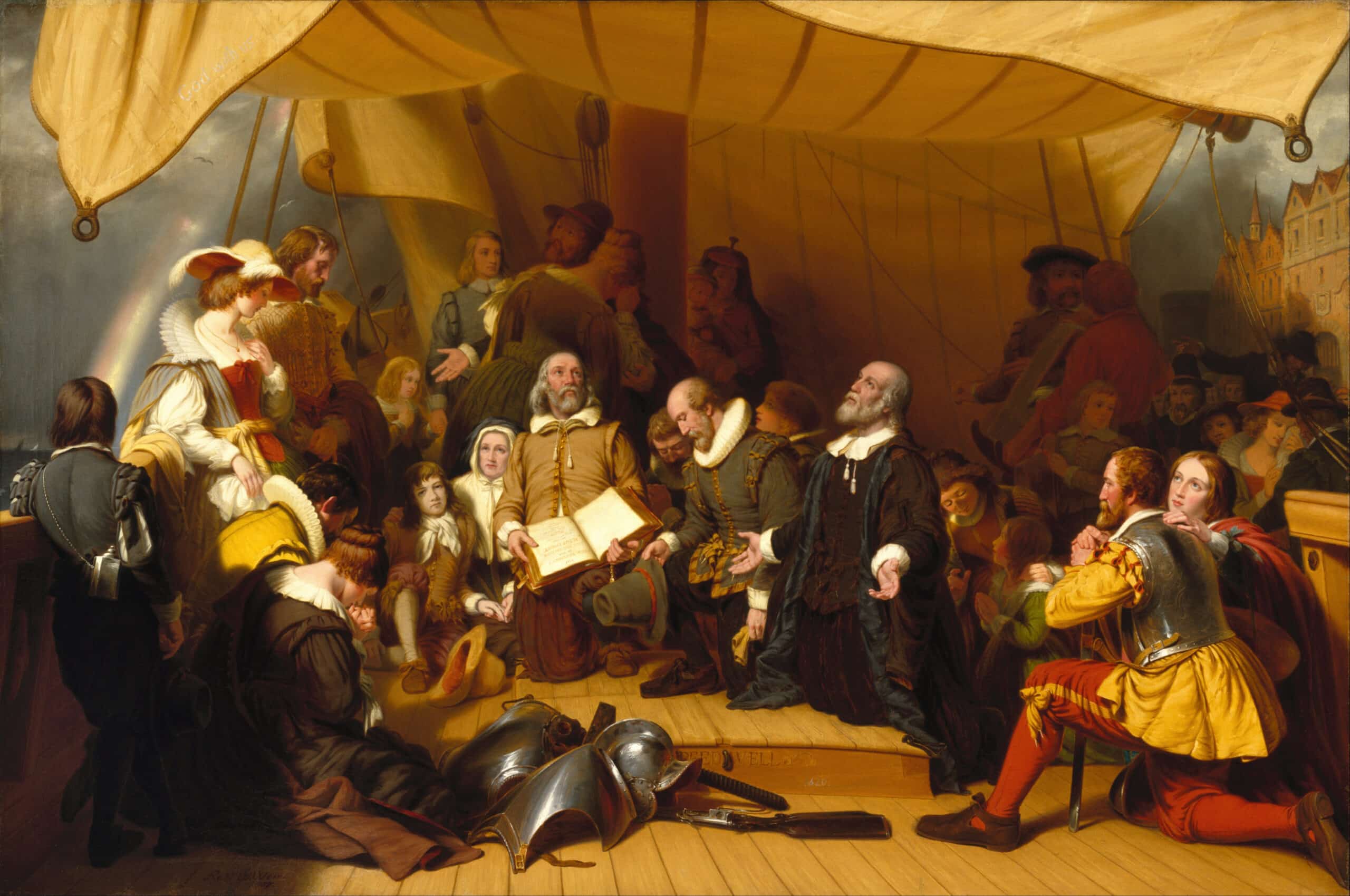
What does it mean to be an American? As we reflect on our nation’s semi-quincentennial, the meaning of American identity demands renewed attention. For generations, we have looked backward to the ideals and events of the Founding to understand our origins and, consequently, our future as heirs of this distinctive creedal nation. Yet looking only at the events of the Revolution, without seeing them in light of our nation’s deeper covenantal roots, one fails to grasp the exceptionalism that lies at the very heart of American identity. The Founders did more than draft a contract, transactional and revocable, in the manner of Enlightenment secularism. Rather, they sealed a covenant that was older, deeper, and more binding than any Lockean agreement between the government and the governed. Only by recovering the meaning of that covenant – and what it asks of us in return – can we comprehend not just what the Founding meant, but who we, as Americans, are still called to become.
When examining seventeenth and eighteenth century political thought, scholars often begin with John Locke, whose social contract theory envisioned government and the governed as separate parties, bound only by mutual consent. Yet America’s founding documents chart a strikingly different course. The Declaration of Independence does not merely establish a contract between colonies and colonists. Rather, it invokes a higher authority, the divine, thereby diverging from the secular logic of contracts entirely. This departure has deep roots of its own. As historian Eric Nelson observes, Hebraic political theology had, for a century before the Founding, challenged Europe’s contractarian tradition, carrying echoes of God’s covenant with Israel. Even Thomas Hobbes, no champion of republican ideals, engaged this tradition in Leviathan, referencing the promise God renewed with Israel at Sinai writing, “I will reign over you, and make you to stand to that Covenant which you made with me by Moses.” Read in this light, the Declaration appears not as a contract, but as a covenant — an enduring promise sworn by the Founders before God Himself, binding their heirs, including us, to an eternal sovereign. This covenant proclaims that our rights originate not from earthly kings but from the King of Kings, and that no temporal authority, however mighty, can rescind what Heaven has bestowed.
This pattern of covenant reaches far beyond the American experiment, tracing its roots to the earliest chapters of Biblical antiquity. God’s covenants with Noah, Abraham, and Moses forged intimate bonds between the Lord and His people. Throughout the centuries, these bonds were repeatedly tested, broken, and ultimately renewed. Their endurance across generations stemmed not merely from the agreement itself, but from the way it was handed down: not by statute or decree, but through story, ritual, and collective memory. Each generation, inheriting this legacy, assumed both its privileges and obligations anew.
Continue reading original articleRelated Articles
-

-

-

- Philosophy
- |
- Politics
Visiting Philosophy Lecturer: Pro-Natalist Policy Interventions Are Illegitimate
- Cornell University
August 30, 2026