
Freya and Freud
Over the summer, I work as a face painter. A fun perk of the job is that I’m always up to date on baby-name trends, because of all the children I meet. Recently, a little girl named “Freya” hopped into my chair. When I complimented her name, derived from the Norse goddess of love, beauty,…
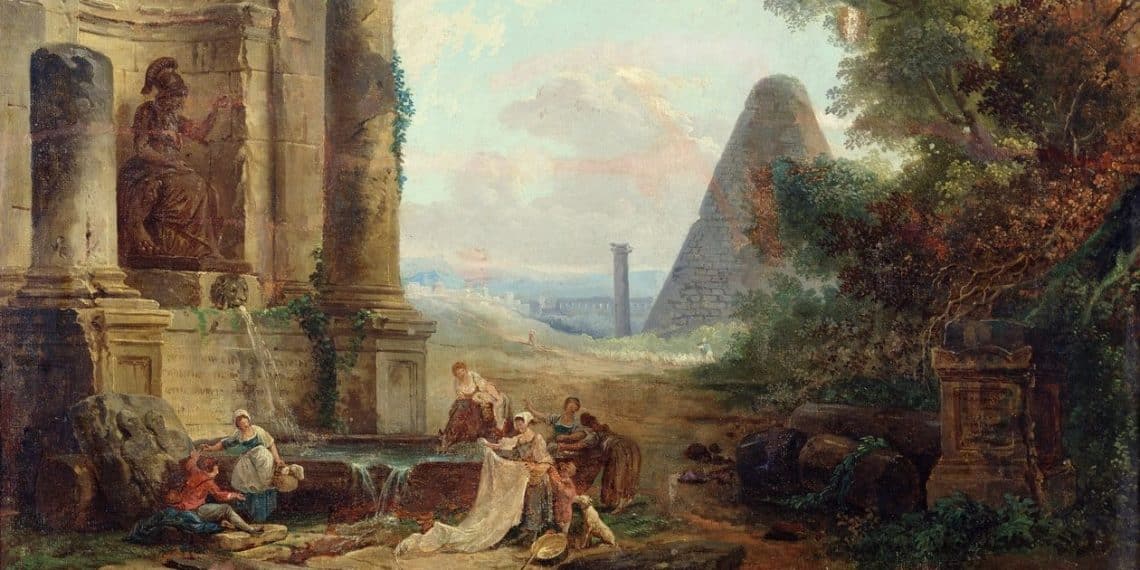
Over the summer, I work as a face painter. A fun perk of the job is that I’m always up to date on baby-name trends, because of all the children I meet. Recently, a little girl named “Freya” hopped into my chair. When I complimented her name, derived from the Norse goddess of love, beauty, and battle, she immediately began trying to convert me to Norse paganism! “I believe in the goddess,” she told me, “And you should too.” This was a surprisingly run-of-the-mill experience—this girl was the third Freya that I had painted that day!
Statistics tracking the decline of Americans and Europeans who identify as traditional Christians are often accompanied by a startling footnote—more people than ever are self-identifying as “spiritual.” Some conservative Christians react to the rise of neopaganism with triumphal crowing about the impossibility of an atheistic society, (mis)quoting G.K. Chesterton: “When people cease to believe in God, they do not believe in nothing; they believe in anything.” Occasionally, there is even a sense of false affinity between traditional, history-loving Christians and neopagans, borne of a similar Romantic view of myth, mutual respect for the past, and discontent with our secular time. However, after years of talking with neopagans, asking questions about their seemingly bizarre beliefs (my mom works at the Renaissance festival—I’m practically an expert!), I would caution Christians against such sentiments. The “pagan revival” is not a reaction against anti-sacral modernity, but an advanced stage of the deconstruction and aestheticization of religion, backed by a strong, anti-Christian, intellectual heritage.
Sociologist Phillip Rieff, an author with whom GCC students might be familiar through the work of Dr. Trueman, provides a helpful framework for understanding the rise of neopaganism in his book My Life Among the Deathworks. Rieff classifies societies into first, second, and third world – terms which ironically invert the usual connotations of national development. For example, using Rieff’s terminology the current United States of America would fall into the “third world” category. These three might also be called fate, faith, and fiction societies. First world societies are governed by “fate…the unchangeable directive force of some unsurpassable authority from which all authorities…derive.” Some examples of the faceless “directive force” of fate are the traditional Grecian concept of fate, Platonic idealism, and Aboriginal Dreamtime. The gods in first-world cultures are aspects or servants of “fate.” The great monotheisms belong to the second world, that of “faith,” whose worldviews and interdictions are grounded in specific divine revelation, not a vague force. Finally, our modern culture is the third world. Its prime goal is not to follow revelation, but to dismantle the second-world’s faith-focused structures. Because of this, Rieff would say it is not a true culture, but an anti-culture. The characteristic element of the third world is “fiction”—there is no revealed sacred order, only rhetorics and readings by conflicting powers or interests.
Continue reading original articleRelated Articles
-

- Uncategorized
Akismet: A small integration detail with a big impact
- University of Chicago
July 15, 2026 -
-

- Uncategorized
Open Channels FM: How AI Tools Are Transforming Everyday Web Design Practices
July 15, 2026