
Something to do with being entertained
On the works of David Foster Wallace.
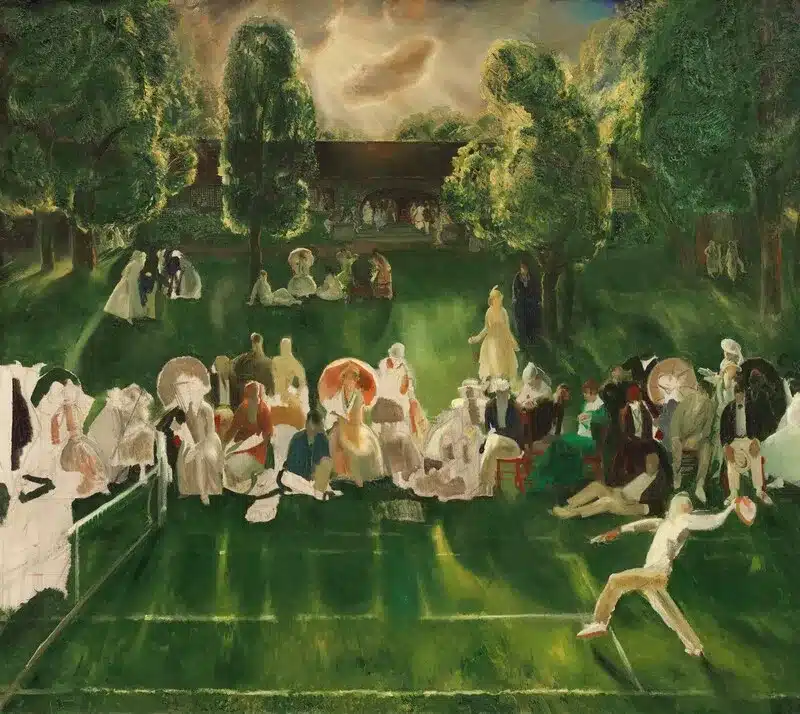
“The Soul is Not a Smithy,” like most of David Foster Wallace’s work, is initially a frustrating short story. Ostensibly, it is about four children who, in the midst of a civics teacher’s mental breakdown, remain seated instead of fleeing. At least, this is what the narrator claims the story is about—but a significant chunk of the pages are spent dealing with entirely fictitious storylines that the narrator imagines while sitting in class. Despite having been diagnosed with unsatisfactory listening skills, his desk is placed near the windows, which “led [his] attention not merely to wander idly, but to actively construct whole linear, discretely organized narrative fantasies.” As he faces studying the US Constitution, Wallace’s narrator doesn’t choose simply to ignore his schoolwork; rather, he pays attention to something else, daydreaming, which “often required more effort and concentration than it would have taken simply to listen in class.”
There are two things at play here. First is the act of paying attention. Second is what you choose to pay attention to—what entertains you. These themes haunted Wallace, maintaining such a strong grip on his psyche that everything he wrote stems from trying to make sense of them. His magnum opus, Infinite Jest, is named after a film so completely entertaining that the viewer wastes away, their attention so utterly entranced that they neglect the basic necessities of their corporeal form, “eyes wobbling around like some drug-addicted newborn.” Actual descriptions of “the Entertainment” are sparse, but perhaps the most telling detail is that it is both technically gorgeous and structurally hollow. A veritable black hole: it consumes everything and produces nothing.
For Wallace, this sort of cataclysmically dangerous device was not merely a MacGuffin for him to write about Canadian terrorists in wheelchairs. The careening of mass media and twenty-first century society towards increasingly potent forms of entertainment deeply disturbed him. Over a five-day conversation author David Lipsky captures in his memoir, Although of Course You End Up Becoming Yourself: A Road Trip With David Foster Wallace, a recurring topic is television, the most efficacious attention-hoarder of the time. The problem with television is that it feigns the creation of relationships without any of the attention and care actually necessary in day-to-day life. Wallace compared it to candy: temporarily gratifying but insufficient to nourish a human. He feared that, as technology gets better, it would become “more and more pleasurable, to be alone with images on a screen.” The prospect of existentially unsatisfying pleasure was terrifying. For Wallace, it was literally a matter of life and death.
Continue reading original articleRelated Articles
-

-
-

- Literature
- |
- Philosophy
Tolstoy and the Academy’s Politics of Dismissal
- Harvard University
September 24, 2026