
Strange Bedfellows: Edmund Burke and the ACLU
Conservatives across the country can learn an important lesson from the amendment fight in Kansas.

Politics makes for strange bedfellows. This primary season, I found myself voting with the ACLU of Kansas to oppose a constitutional amendment allowing for popular election of Supreme Court justices in my home state. In pushing this bill, Kansas Republicans seem to have forgotten a judge’s proper role: to say what the law is, free from popular pressure.
It’s true that Kansas’s method of selecting justices is unique among the states. The state Bar Association controls our nominating commission, with lawyers commanding at least four of nine seats plus the chair. This approach, known as “assisted appointment,” is practiced by 21 states. In these states, a nominating commission creates a list of candidates from which the governor selects a justice. Then, after the justice serves a term, they stand for retention, at which point the public decides whether they should remain on the court.
The makeup of nominating commissions varies; some are “governor-controlled,” where the governor appoints the majority of members and may even decline to take the commission’s advice. Others are “hybrid,” meaning neither the governor nor the state Bar Association controls the commission. Kansas has the only purely “Bar-controlled” commission, but outside this mechanism, it aligns with most states that eschew popular election of judges.
Continue reading original articleRelated Articles
-
- Legal
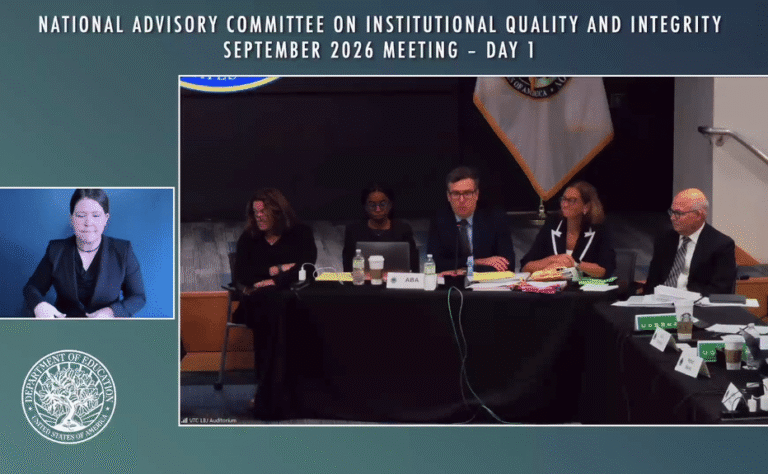
Did an accreditation council eliminate the American Bar Association today?
- John Adams College
September 24, 2026 -

- Abroad
- |
- Legal
Former Stanford Hoover Fellow Runs Surrogacy Firm Helping Chinese Elites Have U.S.-Citizen Children
- Stanford University
September 24, 2026 -

- Legal
Conservatives Challenge Private Lawsuits on Environmental and Civil Rights
- Cornell University
September 11, 2026