
Mahmoud Khalil’s Memoir Can’t Decide What It Wants to Be
No Land to Stand On reads more as a feel-good morality play than an artifact of resistance.
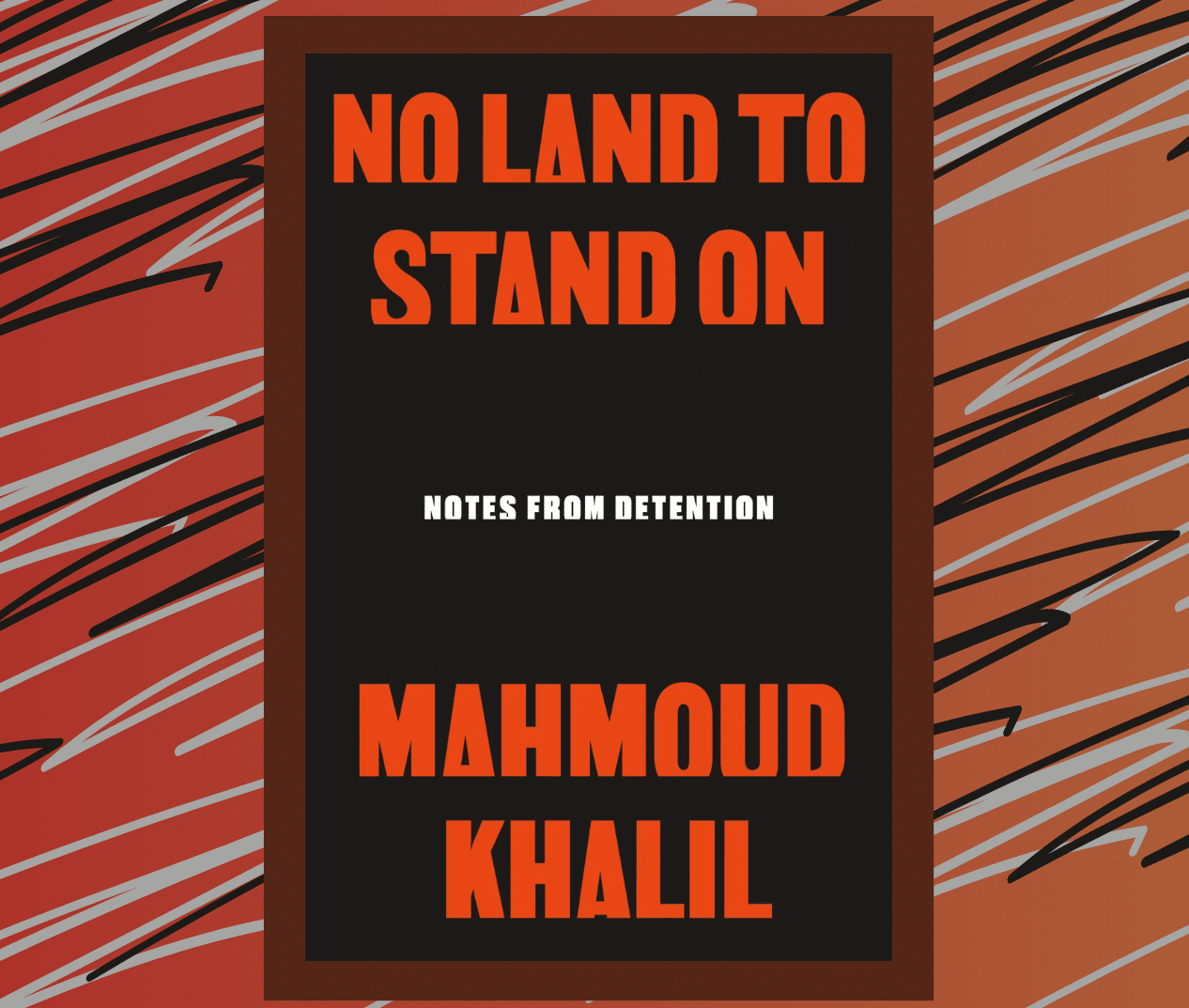
Mahmoud Khalil’s new memoir No Land to Stand On begins with a harrowing account of his participation in a march of return to Palestine on Nakba Day in 2011, when he was 16. Born into a family of Palestinian refugees in Syria, he recounts how, on the morning of Nakba Day, he had promised his father not to participate in the protests; he would leave his house only to take a trigonometry exam. Instead, urged by his teacher to participate in the commemoration of the 1948 “catastrophe” during which Israeli militia killed an estimated 13,000-15,000 Palestinians and displaced over 700,000, he went to the protest. He saw his father there and was shot in the leg before he could reach Majdal Shams, an Israeli-administered town that sits in the disputed Golan Heights region at the intersection of Syria, Lebanon, and Israel. His first thought upon getting shot was that his mother would be furious at him for getting blood on his pants.
The matter-of-factness with which this story is conveyed permeates the entire memoir. Khalil adopts an “aw-shucks” persona, writing of how he had, unwillingly, become “a living martyr,” even as his day-to-day preoccupations centered around his wife, Noor: whether she was safe, whether she could have him there for their baby’s birth. The memoir essentially functions as a personal drama, with the underlying political tension serving as mere backdrop.
To establish the arbitrariness of his detention, Khalil sets out, anecdote by anecdote, to prove, paradoxically, both his mundanity and his exceptionalism. He has a green card and is married to a U.S. citizen: mundane. The “Rubio determination” would seek to deport him for his “past, current, or expected beliefs, statements, or associations that are otherwise lawful”: exceptional. In pursuit of this juxtaposition, Khalil often downplays his rhetoric and involvement in activism, despite his insistence that he is not a martyr for free speech but a martyr for Palestine. To paint this as a free speech issue, he argues, would necessitate participating in the erasure of Palestine in public discourse that made possible the circumstances of his arrest.
Continue reading original articleRelated Articles
-
-
-

- Culture
- |
- Opinion
How American Families Built the Ultimate Counter-Culture Movement
- Daily Wire
August 27, 2026